1

Your cart is empty.

The UK’s leading professional architecture magazine | Always #RetroFirst

Products


AJ 17.07.25: The summer issue

AJ 17.07.25: The summer issue

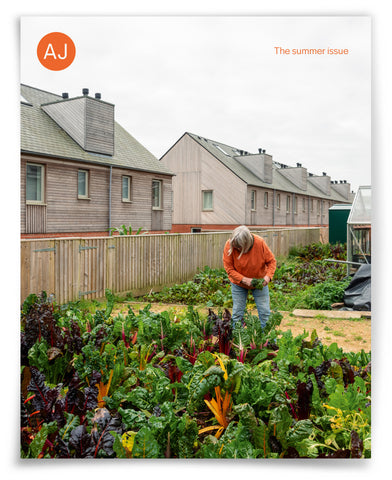
Buildings nestled in burgeoning landscapes, productive gardens providing a community focal point, nature offering sanctuary and solace: the lush abundance of the summer months is on bright display in our July issue.

Four building studies are presented within these pages. For 16 years Barefoot Architects and Bridport Cohousing CLT battled to plan Hazelmead, the largest community housing project in the country. We discover that the effort put in has been rewarded, with the residents feeling a deep connection to their homes, community – and shared vegetable beds.

Feilden Fowles’ work on the Natural History Museum’s formerly underused gardens has created an engaging landscape of outdoor living galleries. The project includes a welcoming garden kitchen and nature activity centre, the latter sporting a sculptural gutter that deposits water into open channels so children can learn about the water cycle.

Our other studies are of Allies and Morrison’s dockside leisure centre and workspace at Canada Water, and FCBS’s Lambeth office block, which has pioneered innovative circular solutions in mass timber construction.

In News, it’s all change at Liverpool Street Station, as original architect Herzog & de Meuron bids to be reappointed to the high-profile job – it’s rumoured that towers on stilts are involved... We also publish all 20 projects receiving RIBA National Awards this year, along with the shortlist for the AJ Retrofit & Reuse Awards.

Elsewhere in the issue, Chris Simmons writes a column on redundancy entitled What to do if you’re chewed up and spat out by architecture, while the Secret Architect is lost in an obstinacy of project managers. And this month we have a bumper Sketchbook section, showcasing the best sketches from attendees at the AJ100 Awards in June.

£16.00


AJ 18.12.25: Homelessness

AJ 18.12.25: Homelessness

In our final issue of 2025 we’re focusing on homelessness as an important part of our housing drive. The causes of homelessness are many and varied, and architects and good design cannot solve them alone. But architects can contribute to positive change: they can bring a strategic and practical approach – and support targeted, proven steps.

Three building studies explore the topic from different angles. Reed Watts Architects has created a life-changing sanctuary for rough sleepers tucked away in London’s Square Mile. In a Revisit feature, the AJ accompanies architects from Peter Barber and Holland Harvey as they assess homeless support spaces they designed. Also profiled is shedkm’s transformation of a worn-out concrete 1960s complex into 73 homes for families at risk in Croydon.

Our news feature, Beyond Container Logic, investigates the role architects are playing in providing well-designed temporary housing for those most in need. An accompanying essay by RCKa’s Russell Curtis explores how homes can be delivered both at speed and at scale, and what factors are needed to bring this about.

Also in News is a must-read feature on salaries which lays bare by just how much we are all under-paid, and you can find out whether you’ve been paying enough attention this year with our Buildings quiz – 24 points and bragging rights are up for grabs.

Meanwhile in the Culture section, we curate your winter reading with a round-up of the latest architecture books, and there is a review of an exhibition at the Sir John Soane’s Museum exploring Egypt’s influence on British design.

This month’s opinion columns are by Kunle Barker, who asks whether London is dying, and Aga Szedzianis argues we should look to the Netherlands when designing the next generation of New towns.

Other contributors to the issue include David Grandorge, Hellman and Amy Leung, who shares her sketches.

£16.00
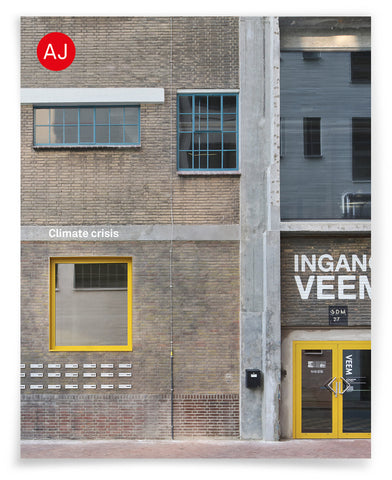


AJ 19.12.24: Community

AJ 19.12.24: Community

This issue is devoted to buildings that are created with community at their core, a particularly important theme as we shake off the old year and face the new.

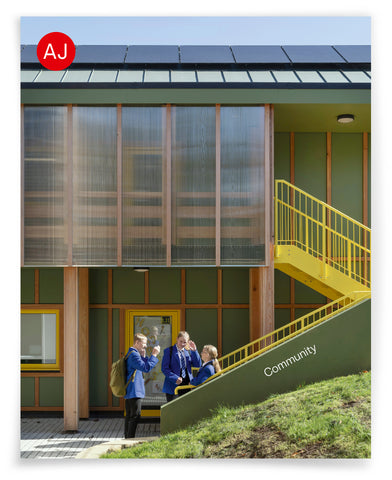
Heathlands is one of the largest schools for deaf children in the UK, and we publish a building study of the Woodland Building, designed by Manalo & White in collaboration with deaf architect- led practice Richard Lyndon Design. Each careful detail – from site to sightlines, from colour scheme to desk placements – focuses exactly on what signing and lip-reading pupils want and need. Other building studies include Jonathan Hendry Design’s community hub in a quintessentially English village, and a ‘carefully considered’ nursery fit-out by Office S&M in London.

In News, we present the findings of an extensive salary survey, which suggests pay rises might be on their way out. You can also read a feature on seven buildings that were lost to demolition in 2024. Christmas diversions are provided in our Buildings of the Year quiz and festive viewing round-up.

The Culture section contains a review of an exhibition showcasing the work of US architect Paul Rudolph, and Owen Hatherley takes a look at Simon Jenkins’ latest book, A Short History of British Architecture.

Also in the issue are opinion pieces by The Secret Architect, Toko Andrews and David Grandorge; a summary of the best architectural competitions; sketchbook, courtesy of Steve McCloy; and Hellman’s Christmas story.

We wish you and yours a very Merry Christmas and a happy and peaceful New Year.

£16.00
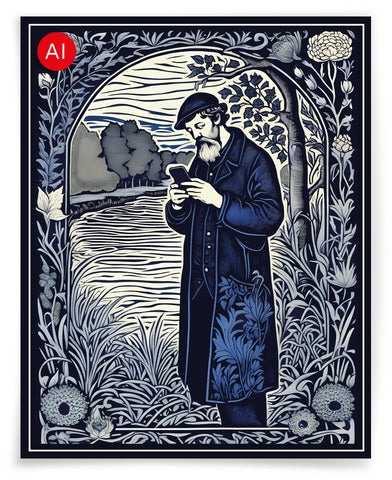

AJ 20.02.25: Culture

AJ 20.02.25: Culture

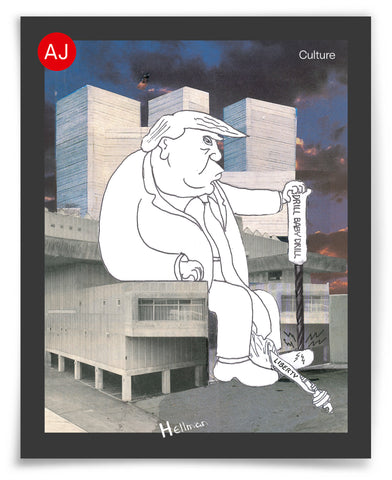
This month’s culture-focused issue contains a review of The Brutalist, which is also the title of Hellman’s cartoon of Donald Trump that appears on the cover. As AJ editor Emily Booth writes, ‘Megalomaniac? Genius? The former property mogul’s cultural impact is already profound.’

We present studies of three cultural projects, including ‘a powerhouse for dance’: O’Donnell + Tuomey’s Sadler’s Wells East. Gianni Botsford’s retreat for creatives on the Isle of Wight, and Reiach and Hall’s museum expansion in western Scotland, are also in the issue. And there is a feature called Exhibitionists, in which we ask a range of practices to tell us how they approach museum and gallery fit-outs, in particular how they prioritise sustainability in their work.

In News, there is a profile of government architects – yes, they do exist – and a feature on infill development – the issues that are holding it back, and some potential solutions. We also share a first look at Niall McLaughlin’s designs for the Maggie’s Centre in Cambridge.

You can read a book review of Protest Architecture by Nick Newman, and there are columns by Hana Loftus (‘a hideous new footbridge underlines the poor state of design standards in the UK’), and Toko Andrews, who argues that architecture shouldn’t be an ‘old man’s game’ anymore.

In Competitions you can find out about the William Sutton Prize, while this month’s sketches are courtesy of Jack Oaten.

£16.00
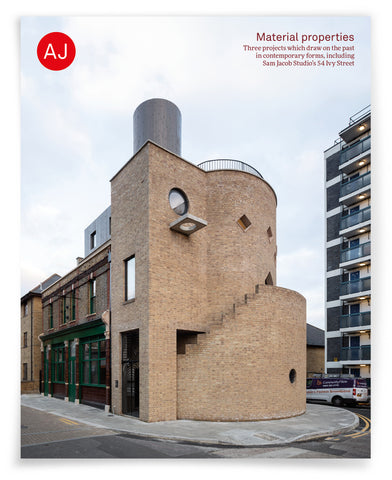
AJ 20.03.25: Natural Materials

AJ 20.03.25: Natural Materials

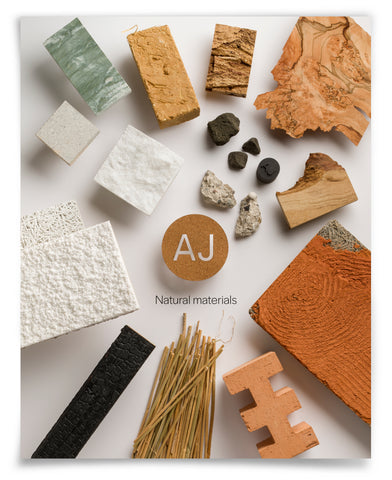
This month's issue demonstrates how building more with natural materials promotes sustainability, circularity- and joyful architecture.

We highlight three projects with natural materials at their core, including Hugh Strange Architects' House on a Hill; David Kohn Architects' sinuous expansion of one of the University of Oxford's oldest colleges; and a community food market in Ilford designed for disassembly by Clark Architecture and Webb Yates.

For further inspiration, a feature ‘Natural materials on site’ showcases five new projects including a rammed earth house by Tuckey Design Studio and a 'net zero' welcome centre built with straw bales by Citizens Design Bureau.

In News, Richard Waite examines how Lina Ghotmeh beat big-name practices to land the British Museum job, while Martha Dillon uncovers the lessons to be learnt from a new 'biophilic' school. As Biodiversity Net Gain passes its first birthday, Anna Highfield looks at how architects are finding the new legislation and asks: is Labour as committed to nature recovery as the Tories?

In Culture, Ellen Peirson visits SOIL at Somerset House, sharing how the exhibition opens our eyes to the world at our feet. Meanwhile, an interview with Mio Tsuneyama spotlights the radical approaches to domesticity by Japanese architects, challenging Tokyo's 'scrap and build' new homes culture.

Also in the issue, The Coach shares how to find recognition at your new practice, Rory Chisholm shares his sketches, and a work by Hellman, A Monument For A Monarch, closes the issue.

£16.00


AJ 21.03.24: AI

AJ 21.03.24: AI

A detailed look at how architects are using AI: is it a game-changer or a threat?

‘It’s not hyperbole to state that the physical environment of our future cities will be moulded largely by the work of computer scientists ... architects and place-makers must be more than part of the new conversation, they must also become active in the development of this consequential, software-driven shift.’

So says Keir Regan-Alexander in our special issue devoted to how architects are (or aren’t) using artificial intelligence. Also in this must-read edition you can read the results of the AJ’s AI survey, and find out what these new technologies could mean for the future of the profession. Alongside early adopter Keir’s top tips for starting to use AI, there is a round-up of how practices big and small are using it practically, including Child Graddon Lewis and K Bava Architects.

The more ethical aspects of AI are under the spotlight in an essay by Cristina Monteiro on what William Morris would have thought of it (this is also the inspiration for the cover image). And we’ve let ChatGPT write a building study for us on how Foster + Partners’ City Hall could be transformed into social housing, with visuals ‘created’ by Shutterstock AI and muse.ai.

In Culture, senior lecturer Stephen Parnell reveals how his students used Generative AI to resurrect an unpublished Manplan issue of The Architectural Review. There is also an exhibition review of Albert Frey: Inventive Modernist at Palm Springs Art Museum.

The Secret Architect enjoys a think-piece on AI written by an ingratiating colleague, while Martha Dillon opines that real estate AI is a threat to architects.

In non-AI news, we present two building studies: the multi-use Storyteller building in Sidcup by DRDH Architects, and Alma-nac’s orange- and yellow-hued community and co-working space in Tooting.

This month’s Sketchbook showcases the illustrations of Agustin Coll, and we also publish David Grandorge’s take on AI and Hellman’s on the BT Tower’s imminent conversion into a hotel.

£16.00


AJ 22.02.24: Schools

AJ 22.02.24: Schools

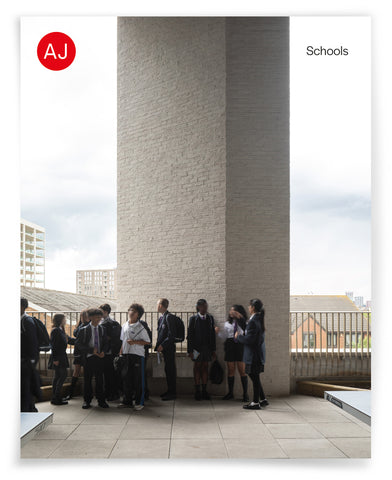
This month’s issue of the AJ explores a sector in need of drastic, visionary and financial intervention: schools. As editor Emily Booth points out in her introduction, ‘while bold budgetary changes are made with the sweep of a pen at the macro level, each crumbling classroom is a local, micro tragedy’.

In News Anna Highfield delves deeper into this topic, asking whether the Tories’ new rescue package goes far enough to address deteriorating conditions in schools, and what measures a new government might take. Plus, we take a first look at Jamie Fobert’s newly revealed Maggie’s Centre plans.

Our building studies include Rivington Studio’s secondary school at Silvertown - an oasis amid the regeneration of east London’s docklands - and a supportive woodland learning environment by Loader Monteith and Studio SJM. Finally we take a look at Surman Weston’s first self-build project - a strikingly innovative and energy-efficient home that reinvents the terraced house.

Elsewhere the first piece in AJ’s new series, ‘Blueprints for Change’, presents Tom Holbrook’s bold proposition for The Arc – an 100-mile public landscape with water at its heart. The series will give voice to ways architects are challenging the most pressing social and environmental challenges. 

In our Opinion pages Cristina Monteiro explains why we need to talk about social value in architecture, while Toko Andrews asks if specialisation is the way to succeed in the profession. And, in Culture, we explore two new exhibitions: SOAS University of London’s Building Africa and Abstractions: Studies of the National Theatre – photographs of Denys Lasdun’s South Bank masterpiece. 

Finally, in Sketchbook we meet Fatima Mejbil of FAUM Architecture, and Hellman introduces us to RIBA presidential candidate Chris Williamson.

£16.00


AJ 22.05.25: Out

AJ 22.05.25: Out

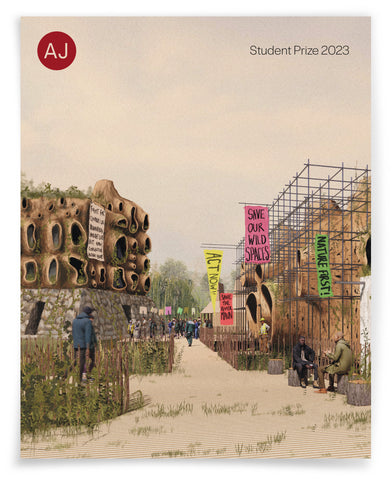
Our special edition explores, spotlights and celebrates the LGBTQ+ community’s rich contribution to architecture, providing much affirmation and inspiration: the AJ is going Out.

We present thought-provoking discussions about queer culture, about whose voices are heard, who gets to occupy space – and where. Space is political, and that feels especially so at present. The RCA’s Gem Barton, who leads the Architecture LGBT+ Academic Champions Network, has a striking take: ‘To queer is to disrupt. To queer is to stretch, bend, reimagine and reject inherited structures that no longer serve us — if they ever did.’

Also within the issue are profiles of the community’s champions and leaders, a feature on why we need LGBTQ+ housing, and a deep dive into nightclub design. With Pride month imminent, be sure to fill your calendar using our detailed diary of upcoming events.

In Opinion, Kirsty Watt and Bek Ziola argue that architects have a duty of care to design spaces for all people, regardless of the recent Supreme Court hearing, and David Grandorge undertakes a queer pilgrimage.

The issue also contains two building studies – Feix&Merlin’s restrained refurb of Walworth Town Hall, and John Puttick Associates’ youth centre in a former power station in Blackburn. Plus we revisit a pioneering senior co-housing scheme co-designed by Pollard Thomas Edwards to see what we can learn from this rare and radical way of living.

In Culture, Daniel Ovalle Coastal writes about how his research into LGBTQ+ housing has led him to create dollhouses, and Derin Fadina reviews the queer-focused pavilions at this year’s Venice Architecture Biennale. While in Sketchbook, four architectural professionals share their work made at life drawing sessions.

Elsewhere in the issue you can find our monthly competitions roundup, the full shortlists for this year’s AJ100 awards, and Aga Szedzianis’s column on why interior designers are paid more than architects.
£16.00